
Israel's Election Leaves No Clear Path to a Government
Record turnout and a surge for Palestinian parties have left both Netanyahu and challenger Gadi Eisenkot short of a majority, with three broad outcomes now possible.
By Kavya Robinson ·
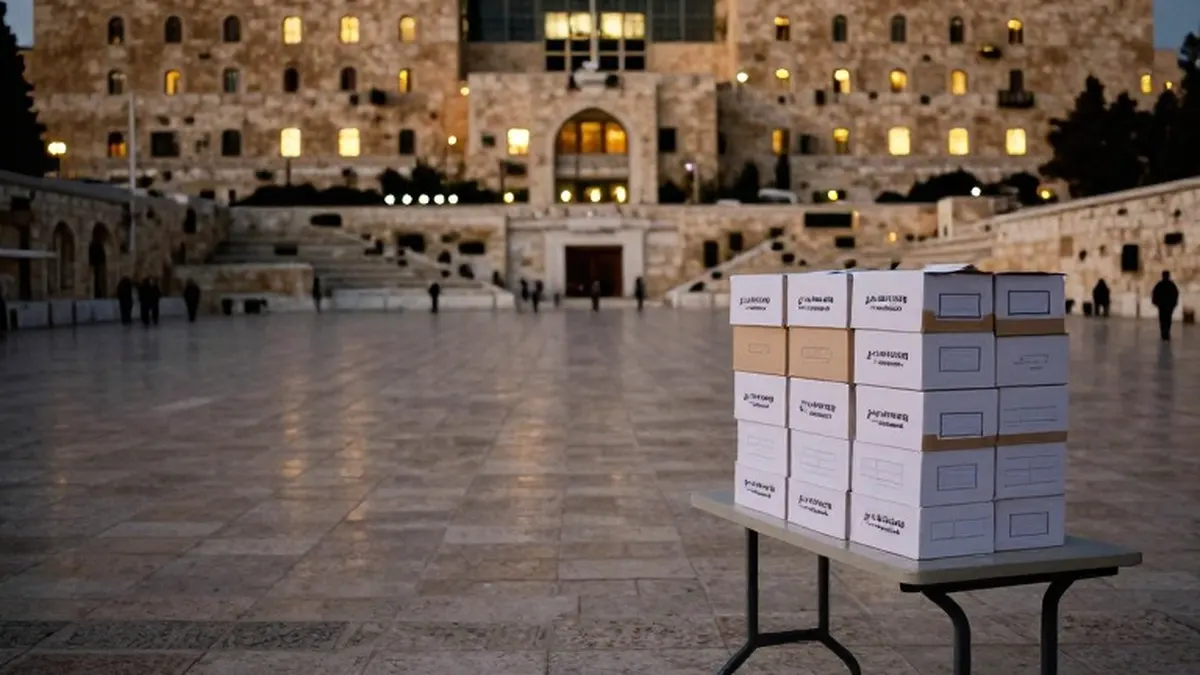
Israel's latest election drew the highest turnout since 2001, but the result has handed neither Prime Minister Benjamin Netanyahu nor his rivals a simple route to power. With 85 percent of votes counted on Wednesday, Netanyahu and his allies held 53 seats, while a bloc led by former army chief Gadi Eisenkot had 48. Two slates representing Palestinian citizens of Israel, the Joint List and Ra'am, together held 19.
A majority in the 120-seat Knesset requires at least 61 members, and no camp is close. The Palestinian parties made striking gains, yet almost all Israeli political leaders have promised to keep them out of any future coalition. Coalition talks are about to begin, and analysts see three main scenarios.
The first is that Netanyahu stays in office. Exit polls released at 10pm on Tuesday showed his bloc trailing Eisenkot's, prompting some to write him off early. As the count progressed, however, his Likud party emerged as the largest in parliament with an expected 26 seats, and his coalition was set to finish five seats ahead of the Zionist Jewish opposition. As the sitting prime minister, he remains in office until a replacement government is formed, and President Isaac Herzog is likely to invite him to try first.
Netanyahu could pursue this in two ways. He might persuade MPs from some opposition parties, including right-wing ones with settler members, to switch sides, though that would take a significant number of defections. Or he could build a unity government with major opposition forces such as Eisenkot's Yashar and Naftali Bennett's Together slate. US President Donald Trump, who endorsed Netanyahu before the vote, and Herzog would reportedly prefer that outcome. It would probably shut out at least one of the far-right parties led by Finance Minister Bezalel Smotrich and National Security Minister Itamar Ben Gvir, and could also cost the ultra-Orthodox parties Shas and United Torah Judaism, since the opposition campaigned on conscripting Haredi youth.
Such a deal faces a steep obstacle: Netanyahu is toxic to opposition leaders and their voters. Benny Gantz, another former army chief, ended his political career by joining a unity government with Netanyahu in 2020. Still, Assaf David of the Vanleer Institute told Middle East Eye that opposition parties might prefer a Netanyahu government without Smotrich and Ben Gvir to a second election in which the right would be "much more organised and the opposition bloc less organised."
The second scenario is a minority government under Eisenkot. His own numbers trail Likud and Netanyahu's bloc significantly, but nearly 70 anti-Netanyahu MPs were elected once the Palestinian parties are counted. Bennett, Avigdor Lieberman and other opposition figures have ruled out working with the Arab parties, so a formal coalition seems unlikely. Eisenkot could instead seek outside support from them.
David warned that this carries serious risks, because Netanyahu would likely portray it as Arabs stealing the election with a minority of Jewish MPs. "If there is no Jewish majority against Netanyahu, relying on the Arab vote to tip the scale against Netanyahu will be very dangerous, not just politically, but even security-wise," he said, adding that he does not rule out attempts to assassinate Eisenkot.
The third scenario is another election, as happened twice in 2019 when neither Netanyahu nor Gantz could form a government. The president gives a candidate 28 days, extendable by 14 days on request, before turning to someone else. A slide toward new polls would suit Netanyahu, who would stay as prime minister in the meantime, and David expects conditions to favor his camp.
About 67,000 Israelis are estimated to have returned from abroad to vote, most believed to have backed Netanyahu's opponents, and not all are likely to repeat the trip. Turnout among Palestinian citizens of Israel reached 80 percent, up from 54 percent in 2022, with many voting for the first time and breaking a longstanding boycott. Matching that in a rerun would be difficult, especially with a right-wing base energized to stop the Arab vote. David said the opposition understands it has a "one-shot opportunity" and must rely on the Arab vote.
Source: Middle East Eye