US polls favor Democrats; Israelis vote on Netanyahu's future
New data shows a partisan shift in America ahead of midterms, while voters in Israel choose between the incumbent prime minister and a former military chief.
By Kavya Robinson ·
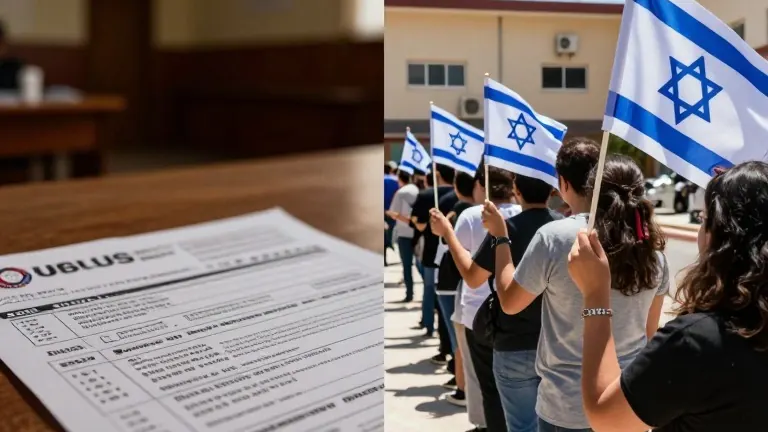
Voters in the United States and Israel are facing pivotal choices this week, with new data suggesting a shift in American power and a decisive test for Israeli leadership. In the US, a joint poll indicates Democrats hold a clear advantage in the upcoming midterm elections. Simultaneously, Israelis are casting ballots in a contest that will determine the next prime minister.
The NPR, PBS News, and Marist poll shows Democrats leading by eight points among likely voters on the generic congressional ballot. This margin suggests a high probability that the Democratic Party will take control of the House of Representatives. However, the Senate remains a toss-up, and experts note that the final results of many races may not be known until days after Election Day. President Donald Trump’s approval rating stands at 40%, a slight increase from previous measures, but his popularity remains low.
Voter sentiment in the US is driven by financial stress. One in three Americans reports facing financial hardships, and four in 10 say their personal finances are getting worse. For Democrats and independents, preserving democracy is a central concern. Among MAGA supporters, immigration is the top issue. Domenico Montanaro of NPR noted that while a Democratic wave is possible, it may be limited. He emphasized that patience is necessary because vote counting in close elections often extends beyond Election Night.
In Israel, the election marks the first time since the October 7, 2023, Hamas attacks that citizens have chosen their leaders. The race is primarily between incumbent Prime Minister Benjamin Netanyahu and Gadi Eisenkot, a former military chief. Netanyahu represents the far-right, while Eisenkot promises a more diplomatic approach and less extremism. Ruth Sherlock of NPR reported high expected turnout, with many Israelis abroad returning specifically to vote. At polling stations, supporters of Netanyahu argued he is essential for security despite recent failures. Critics want him out and seek an investigation into the events of October 7, which Netanyahu has previously blocked.
In a related US legal development, a federal judge heard arguments regarding the Trump administration's effort to force California to set aside ballots from voters alleged to be non-citizens. This follows an appeals court’s decision to stay out of the case. Yesterday, President Trump offered a $1 million reward for tips leading to a voter fraud conviction. Eric McDaniel of NPR pointed out that credible evidence of widespread fraud affecting US election outcomes has rarely been found. The White House maintains these actions are meant to secure the electoral process.
Prediction markets are also tracking the US midterms closely. Shana Bautista, head of global intelligence and investigations at Polymarket, stated that the company has investigated dozens of bets on the election. With the vote scheduled for November 3, analysts expect a long process to form a new government in Israel. The count could continue for days, and the selection of the prime minister may take weeks of negotiations between parties. In the US, the focus remains on whether the eight-point Democratic lead will hold through Election Day.
These political shifts occur against a backdrop of other major institutional changes. Microsoft recently sent memos to approximately 60,000 employees offering voluntary buyouts to reduce its headcount. The offer is available to roughly one quarter of its workforce. In New York, the Archdiocese agreed to pay $800 million to settle claims from around 1,300 individuals alleging sexual abuse by clergy and lay workers. These moves reflect broader adjustments in both the technology sector and religious institutions as they manage internal and external pressures.
The outcomes in the US and Israel will have lasting effects on their respective political landscapes. In the US, the House race will determine the balance of power in Congress for the next two years. In Israel, the choice between Netanyahu and Eisenkot will shape the country’s security policy and diplomatic relations. Both nations are watching closely as the votes are counted and the results begin to emerge.
Source: NPR