Japan's Danjiri Matsuri festival leaves participants dead and injured as crowds maneuver heavy wooden floats
Two men died and 16 others were injured in Osaka during the annual fall festival, joining a tally of four other deaths recorded in 2022 and 2023.
By Arjun Wojcik ·
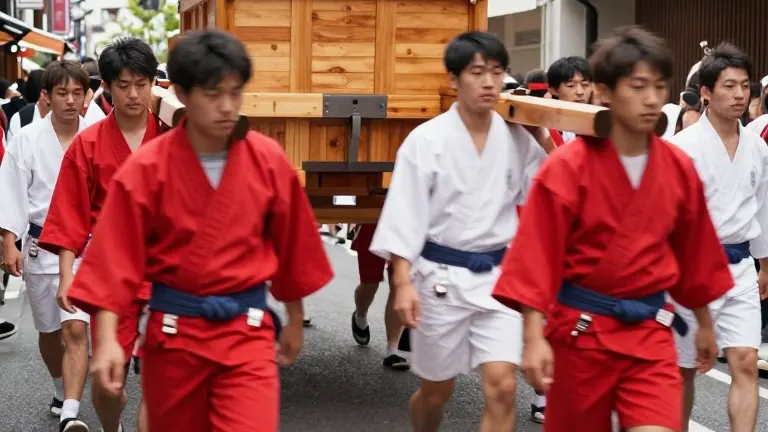
Annual fall festivals in Japan often center on large wooden floats that participants maneuver through city streets, a tradition that carries a high physical risk. In the most recent event held in Osaka, two participants were crushed to death and 16 others sustained injuries. The New York Times previously identified four additional deaths that occurred during the same festivals in 2022 and 2023.
The Danjiri Matsuri involves carriers wearing matching cotton happi coats and shorts as they lift and shake heavy structures. Participants often chant "Yoisho, ja" while working in coordination. The event is described as a high-stakes communal activity where the goal is to party in the street and survive the physical demands of the task.
Sam, the younger brother of Chicago Sun-Times columnist John Seabrook, traveled from Chicago to Japan specifically to take part in the festival. He had lived in Tokyo previously and maintains strong ties to the country. His wife, Yuri, accompanied him during the visit. Seabrook, who has short arms and once rented a spare bedroom on Logan Boulevard to help his brother settle in Chicago, monitored the event from a distance.
"Obviously, there is some trepidation regarding that," Sam said regarding the danger of the event. He noted that the risk is well known to participants. "It's not lost on us that this is a dangerous event, that people get hurt all the time. After your shoulder injury, I [worried] I'm going to be next," he added, referencing a prior injury sustained by a participant.
Operational details of the festival vary by specific shrine and float size. Some floats require 200 people to carry them, while the one Sam participated in involved 40 or 50 people. Five or six different shrines circulate simultaneously during the event. The organization is structured with participants assigned specific numbers to ensure efficiency. "You stand by your number and go lift it up once, then put it back down. Starting slow," Sam explained.
Participants are advised to bring towels to place under their happi coats to prevent shoulder abrasions. The process involves lifting the float higher above the head, shaking it, and then bringing it back down. Several laps are completed around the shrine. Rice balls, known as onigiri, are distributed to the crowd during the proceedings.
Alcohol plays a role in the festival atmosphere. Sam had consumed a single beer before participating. "Alcohol is definitely part of the equation. Also part of why it becomes more dangerous," he stated. The combination of physical exertion and celebratory drinking contributes to the event's reputation for injury.
During the turns, the physics of the float create a fulcrum effect that shifts weight unevenly. Sam, who is taller than most participants, felt the weight heavily during these maneuvers. "My main thought was: 'I don't want this coming down on my shoulder. On average, I'm pretty tall, compared to most people there. The way the physics of the turn works, a lot of weight starts to fulcrum. It's not that long lasting, but you do have that point where you feel like, 'God, this is a lot of weight,'" he said.
Sam described the experience as a "testosterone-laden guy thing" that offers a specific type of communal engagement less common in the United States. He characterized the outcome as a "very cool experience" and expressed a willingness to return for the next annual iteration. "I'm ready to go back and do it again next year," he said.
The festival continues to draw international attention due to the contrast between its festive nature and the frequency of severe injuries. The combination of heavy wooden structures, coordinated human lifting, and alcohol consumption creates a distinct risk profile that distinguishes it from other cultural parades.
Source: Chicago Sun-Times