500 soldiers deployed in South Africa as local vote nears
Security forces are stationed in KwaZulu-Natal while millions vote on municipal councils, with water crises and immigration dominating the debate.
By Liam Kaminski ·
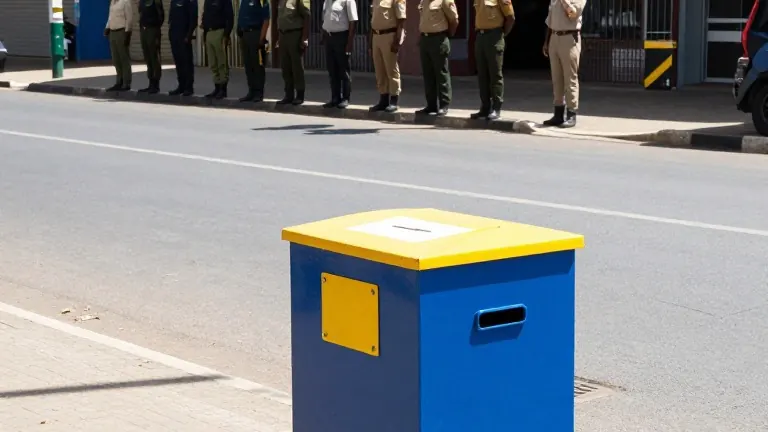
More than 500 soldiers have been deployed to South Africa’s KwaZulu-Natal province as the country prepares for local government elections. The military presence marks a visible escalation in a region where violence against foreign-owned businesses and foreign nationals has been reported in recent months. This security buildup occurs while voters head to the polls on Wednesday to select councilors who will subsequently choose mayors for municipal services.
The elections serve as a direct test for the African National Congress, which lost its parliamentary majority in 2024. The ruling party currently operates within a unity government formed with the Democratic Alliance and smaller parties. In the previous municipal elections in 2021, the ANC lost control of several major cities. It now governs other urban centers through fragile coalitions. Analysts suggest that national political instability may influence how voters perceive local candidates.
Sandile Mnguni, a political analyst at the University of KwaZulu-Natal, noted that voters primarily assess their immediate local conditions. However, he observed that a party's national image can cause its local candidates to be overlooked. This dynamic is particularly evident in Johannesburg, a city of nearly 5 million people that hosts most of the country’s corporate headquarters. The city has changed mayors nine times in ten years, a turnover widely blamed for deteriorating infrastructure and financial mismanagement.
Campaigns in Johannesburg have featured high-profile candidates and extensive outreach efforts. Helen Zille, the 75-year-old nominee for the Democratic Alliance, has used unconventional methods to rally support, including snorkeling in a water-filled trench and performing at local clubs. She told The Associated Press that the ANC is in free fall and that the opposition no longer faces a strong competitor. The Economic Freedom Fighters have nominated Dr. Tlaleng Mofokeng, who recently finished a six-year term as the United Nations special rapporteur on the right to health.
Water quality has emerged as a central complaint across the country, affecting both impoverished townships and affluent suburbs. In Pretoria, more than 500 people were treated for stomach illnesses last week after drinking contaminated water. Political candidates in the capital faced criticism from residents who noted that the water problem persisted while all major parties participated in coalition governments since 2016. Lesego Moshate, a resident of Mamelodi, stated that it was disconcerting to hear parties promise solutions to a problem that existed when they were in power.
In the Eastern Cape, approximately 966 kilometers from Johannesburg, ANC provincial leader Oscar Mabuyane faced similar scrutiny on the campaign trail. Residents blamed his party for inadequate drainage, water leaks, and a poor response to flooding. Mabuyane recently appointed a team to investigate a link between poor water quality and an outbreak of gastrointestinal illness that required medical treatment for more than 110 students at a local university. He described the campaign as rooted in listening to these direct community concerns.
Immigration has become a prominent talking point following protests in recent months. More than 178,000 foreign nationals have reportedly left South Africa during this period. Opposition parties such as ActionSA and the Patriotic Alliance have made opposition to illegal immigration central to their platforms, arguing that it contributes to unemployment and strained public services. Conversely, candidates from the Economic Freedom Fighters have faced criticism for their party’s stance on integrated Africa and fewer restrictions on movement.
Source: WRAZ