Starlink speed cap lifted for Ukraine's 400 km/h drones
Defence Minister Yevhenii Khmara announced the restoration of high-speed satellite links following more than a week of disruption to military operations.
By Arjun Wojcik ·
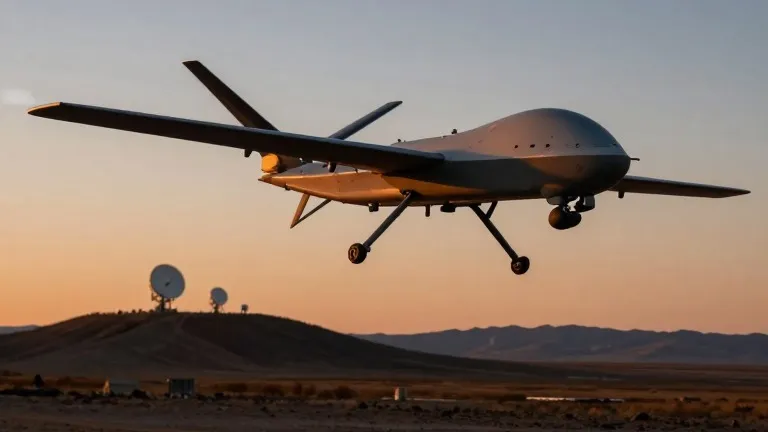
Ukraine’s defence minister, Yevhenii Khmara, announced on Saturday that satellite connections for military drones were stable at speeds exceeding 400 kilometres per hour. This development ends a period of more than a week during which restrictions on Starlink and Starshield services hampered drone operations against Russian forces. Khmara credited diplomatic talks with Washington and the efforts of President Volodymyr Zelenskyy for securing the restoration of these high-speed links.
The disruption affected a system on which Ukraine relies heavily for communications and drone missions. The satellite services are provided by SpaceX, the company founded by Elon Musk. Although the restrictions have now been lifted, the specific authority that ordered them remains unclear. US President Donald Trump has denied responsibility for the changes while defending Musk, a stance that has added strain to the relationship between Kyiv and Washington.
Tensions between the two nations were already high due to Trump’s recent agreement to temporarily lift sanctions on Russian diesel and allow US imports. Earlier in October, Trump suggested that someone other than Zelenskyy should negotiate for Ukraine, a comment that followed their public confrontation at the White House in February 2025. The restoration of satellite service occurs as the United States attempts to revive peace negotiations between Moscow and Kyiv, with technical-level meetings expected in Abu Dhabi in the first half of November.
The timing coincides with a local ceasefire in Oleshky, in the Kherson region. Trump credited his wife, Melania Trump, with securing this arrangement in the area occupied by Russian forces since 2022. Ukrainian and Russian statements indicated the ceasefire would begin on October 27, with a humanitarian operation planned for October 29. This pause in fighting is part of a broader effort to manage the conflict while diplomatic channels remain active.
Fighting continued in other regions despite the diplomatic developments. A Russian missile strike on Lozova in the Kharkiv region killed one man and wounded two others on Saturday. In the northern city of Chernihiv, a Russian attack on Friday resulted in one death and at least 25 injuries. Donetsk officials reported that shelling in Kramatorsk killed one person and wounded six, including three children, while attacks in Sloviansk killed a 62-year-old woman and wounded four others.
Ukraine reported strikes inside Russia on Friday and into Saturday. These attacks targeted the Togliattikauchuk petrochemical plant in Togliatti, a major producer of synthetic rubber, where the mayor confirmed industrial damage but no casualties. Ukrainian forces also struck the Proton electronics plant in Oryol, which produces missile components. Regional Governor Andrei Klychkov reported three deaths in an attack on an unidentified facility, while authorities in Russian-occupied Crimea reported power cuts following overnight Ukrainian attacks.
Russia’s Defence Ministry stated that its air defences intercepted a SCALP cruise missile, four Neptune missiles, and 1,297 Ukrainian fixed-wing drones over a 24-hour period. The state-run TASS news agency reported these figures, which have not been independently verified. These military actions continue as both sides adjust to the restored satellite connectivity and the upcoming diplomatic meetings in Abu Dhabi.
Source: Al Jazeera