Historic Trzebinia Synagogue in Poland Bought for Jewish Restoration
An international partnership has acquired the neglected synagogue in southern Poland, with plans to restore it, open a Jewish museum and welcome visitors to nearby rabbinical graves.
By Arjun Wojcik ·
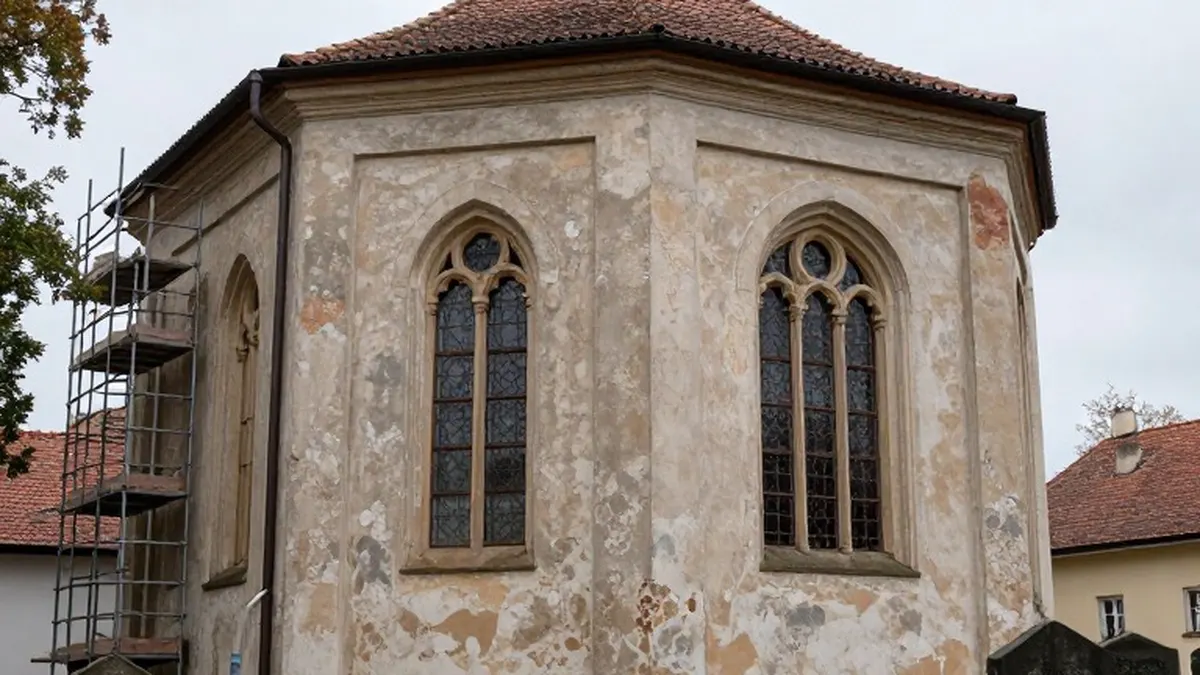
The historic synagogue in Trzebinia, Poland, has been acquired through an international initiative after years of neglect. The aim is to restore the building to its original purpose and return it to the Jewish community.
The property, located in Poland's Silesian region, was returned to the Jewish people on Tuesday. Plans include restoring the structure, creating a Jewish museum and building a hospitality center for visitors to the graves of revered rabbis and Hasidic leaders at the neighboring Jewish cemetery.
The path to the purchase began when the Jewish community of Katowice gave up its right to reclaim the building. The municipality then offered it for sale through a tender process. A group of partners joined forces to keep the property from becoming a non-Jewish venue and to protect its status as a site of Jewish historical significance.
Three parties made the acquisition possible. An Israeli delegation was led by Meir Bulka, known as the "Grave Hunter," who heads J-NERATIONS, an organization devoted to preserving Jewish heritage in Europe. They worked with Jacek Purski, director of the Auschwitz Research Center on Hate, Extremism and Radicalisation, and Marcin Majchrowicz, a businessman and philanthropist committed to preserving Jewish heritage in the Silesian region.
Jews have lived in Trzebinia since at least the 1500s, with a more prominent presence from the 1700s onward. An independent Jewish community was founded in 1815 and reached its peak in 1921, when Jews made up 23% of the city's population. Between the two World Wars, the city had four synagogues, a Talmud Torah, yeshivas, prayer houses, charitable institutions and aid organizations.
Notable rabbinical figures served there, including Rabbi Dov Berish Weidenfeld, known as the Gaon of Tchebinas, and Rabbi Ben Zion Halberstam, the second Rebbe of Bobov. Several rabbis and other spiritual leaders are buried in the cemetery next to the synagogue.
The Holocaust destroyed that community. Many members were deported to concentration camps and ghettos, and numerous residents were murdered at Auschwitz. The community's properties were destroyed, leaving the surviving synagogue as the only remaining testimony to the city's Jewish heritage.
Bulka said the synagogue, "just a 40-minute drive from Kraków," will soon become another destination for Jews visiting the region. "This is not merely about saving a synagogue; it is also about taking responsibility for preserving the memory of an entire community," he said.
Purski said that saving a synagogue is not only about preserving a building, but about recognizing that Jewish life is "not only part of Poland's past, but also part of its present and future."
Where possible, the partners said they will rely on historical documentation and archaeological evidence to recreate the site's appearance before the Holocaust. In the coming days, a foundation will be set up in Poland to manage the restoration, and people will be able to take part through donations and investments.
Source: The Jerusalem Post