Nearly 6 Million Haitians Face Severe Hunger as Gang Violence and Climate Shocks Worsen Crisis
A new UN-backed analysis finds 5.94 million people in Haiti are experiencing severe hunger, with the figure projected to climb to 6.35 million by mid-2027.
By Arjun Wojcik ·
Nearly six million people in Haiti are experiencing severe hunger, and almost two million of them face emergency conditions, according to a new report released on Wednesday. The Caribbean country has a population of close to 12 million.
The UN's Food and Agriculture Organization said the 5.94 million Haitians facing high levels of acute food insecurity represent "one of the highest levels in the world today." It added that more than half of the population struggles to eat every day. The analysis was published by the Integrated Food Security Phase Classification, a multi-partner UN initiative that tracks food insecurity and malnutrition around the world.
The report expects the number of people with severe hunger to rise to 6.35 million by mid-2027, which would be more than half of Haiti's population. The current figure is already nearly a quarter of a million higher than in the initiative's previous report in April.
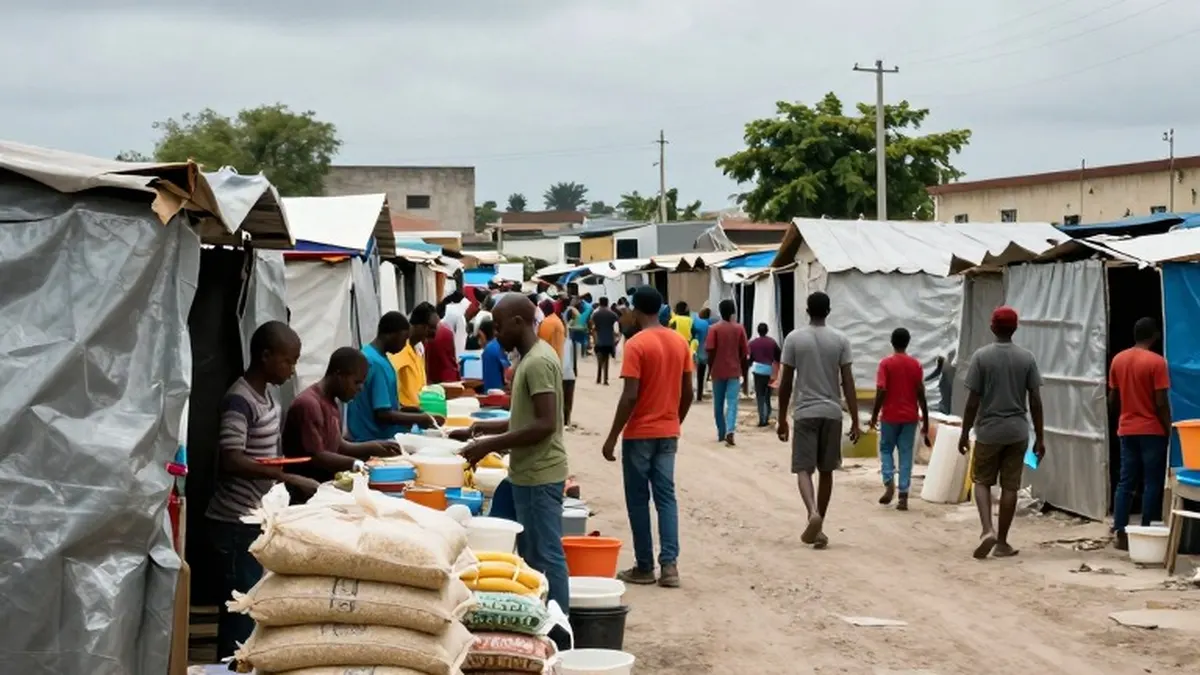
Blame for the deterioration falls on a surge in gang violence and displacement, high food and fuel prices, and an extreme El Niño weather phenomenon that threatens food security. Many of the people whose hunger is worsening live in makeshift shelters or in communities caught in fighting between heavily armed gangs, Haiti's National Police and a UN-backed gang suppression force.
Violence in the central region has driven farmers off their land, and gangs have blocked main roads leading to Port-au-Prince and other areas, keeping goods from reaching the capital. "The numbers are really, really alarming in comparison with other years," said Maxime Ngalula, Action Against Hunger's country director for Haiti, in a phone interview.
Ngalula said negotiating access with gangs can take one, two or three days, and that families sometimes travel up to 15 kilometres to reach a food distribution site because aid groups cannot enter certain areas. His organization distributes cash and food such as rice and beans, but it struggles to assist people forced to move repeatedly between makeshift shelters. "The strategy now is how to accompany these people or follow them," he said.
The crisis has grown sharply over the past decade. In 2014, only two per cent of Haiti's population was food insecure. Hurricane Matthew in 2016 destroyed crops, and the later rise in gang violence has fueled widespread hunger.
The UN's World Food Program said it needs $78 million US to sustain its operations in Haiti through March. The report warned that "humanitarian assistance should be urgently scaled up to meet immediate needs."
The hunger figures come amid a spike in fighting between gangs and the UN-backed force after four Salvadorean aviation technicians went missing in an attack in Port-au-Prince on Oct. 18. El Salvador has since deployed more than 1,000 soldiers to Haiti.
Davina Hayles, Doctors Without Borders head of mission in Haiti, said in a statement on Wednesday that the group is "very concerned about this surge in violence in densely populated neighbourhoods of the capital." She added: "We fear that this armed conflict will claim even more victims and displace even more people in the coming days, particularly with the arrival of additional international security forces."
Source: CBC News