Carney Signs Turkey Pact Amid Rights Debate
The Canadian prime minister formalized a strategic alliance with Ankara while defending his government's balancing act between global trade and human rights values.
By Kavya Robinson ·
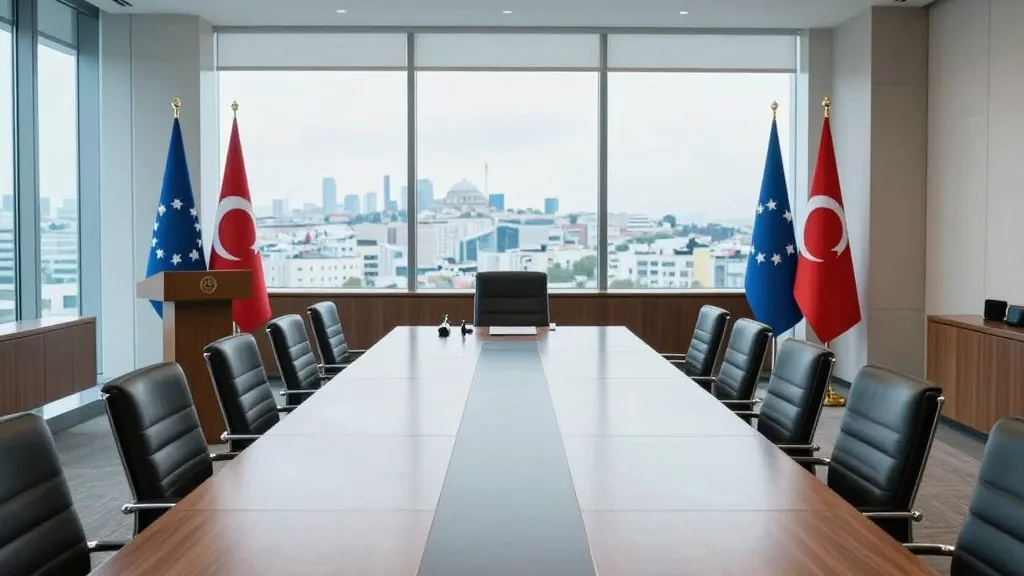
Prime Minister Mark Carney concluded a diplomatic visit to Turkey by signing a strategic partnership with President Recep Erdogan's government on Friday. The agreement marks a significant shift in Canadian foreign policy as it seeks to diversify trade relationships beyond the United States. Carney used the occasion to defend his administration's approach to international relations, arguing that maintaining high standards while engaging with imperfect partners is the most realistic path for a major economy.
The signing ceremony took place against a backdrop of renewed criticism regarding Turkey's domestic political climate. Human rights organizations have long monitored the Erdogan government, and concerns intensified this month. Critics allege that recent high-profile operations by Turkish authorities were designed to silence opposition figures, curb independent journalism, and restrict the freedoms of marginalized communities. These developments have cast a shadow over the new bilateral ties.
Carney framed the deal through the lens of values-based realism, a concept he has previously employed to describe Canada's foreign policy. He emphasized that working with other nations does not equate to endorsing every aspect of their governance. During a press conference on Friday, he stated, "Engagement in those partnerships does not mean approval." He further noted that very few countries in the world currently match the specific standards maintained by Canada.
Details regarding the diplomatic exchanges between the two leaders remain somewhat guarded. A statement from the Prime Minister's Office confirmed that Foreign Affairs Minister Anita Anand discussed human rights issues with her Turkish counterpart on Thursday. When asked if he personally raised these concerns with Erdogan during their separate meeting, Carney declined to provide specific details. He explained his preference for direct and open conversations with leaders, suggesting that such talks are more effective when they are not reported in exhaustive detail. He confirmed, however, that these issues were indeed raised.
The strategic pivot toward Turkey is part of a broader effort to reduce Canada's economic reliance on the U.S. market. While previous diversification efforts have focused heavily on Europe and the Indo-Pacific region, the government has increasingly looked to other states. This includes recent engagements with countries that have faced scrutiny over their human rights records, such as Saudi Arabia. The Turkey partnership fits into this wider strategy of building a more resilient global trade network.
Following political discussions in Ankara on Thursday, Carney moved to Istanbul to meet with business leaders. Key economic interests include the potential sale of Canadian nuclear technology to help Turkey meet its climate goals. After signing the partnership, Carney indicated there are good chances that Canadian engineering firm AtkinsRealis will be selected as a partner. The company would play a role in building two power plants that are currently in the planning stages in Turkey.
The visit also provided an opportunity for Carney to address growing tensions with the United States. On Thursday, the U.S. Embassy in Ottawa released a fact sheet formally accusing Canadian leaders of interfering in the upcoming U.S. midterm elections scheduled for November 3. Carney responded forcefully on Friday, rejecting the allegations. He stated, "There is no merit to these claims, so I'll call it out that way." He expressed disappointment that the U.S. envoy felt it was his role to make such suggestions.
Carney emphasized that Canada maintains a deep diplomatic presence in the United States and has extensive contact with American companies, citizens, and individuals. He argued that these routine interactions are not a sign of meddling. "As a country Canada is very, very careful to not be seen to interfere in the democratic process," he said, reinforcing the government's position that its engagement is standard diplomatic practice rather than political intervention.
The new partnership is expected to influence trade flows and diplomatic dynamics in the coming year. As Canada navigates its role in a fragmented global landscape, the Turkey deal serves as a test case for its values-based realism. The government faces the challenge of ensuring that economic gains do not come at the cost of its stated principles, a balance that will likely remain a central topic of political debate in both countries.
Source: CBC News