
120,000 dolphins dead in Black Sea
Researcher Ivan Rusev says naval mines and sonar have killed one in four cetaceans in the region since the 2022 invasion began.
By Kavya Robinson ·
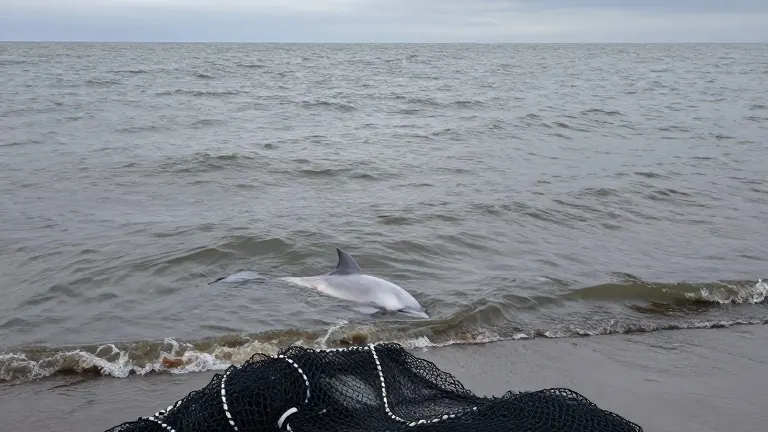
Since Russia launched its full-scale invasion of Ukraine in 2022, more than 120,000 dolphins have died in the Black Sea, according to Ivan Rusev, head researcher at the Tuzly Lagoons national park. This figure represents one in four cetaceans in the region. Rusev told Al Jazeera that approximately 50,000 died in the first year alone. He noted that the ongoing hostilities are killing hundreds of times more bottlenose dolphins, short-beaked dolphins, and harbour porpoises than before the war.
The primary causes of death include naval mines, explosions, and military sonar systems. Rusev explained that these noises deafen the animals, disrupting their echolocation. Without this primary survival tool, the dolphins cannot navigate, communicate, or hunt. When they fail to catch fish, they lose weight rapidly. They then consume their own blubber, which is saturated with pollutants from wastewater, agricultural runoff, microplastics, and antibiotics. This self-poisoning weakens their immune systems, making them susceptible to lethal respiratory infections caused by morbillivirus.
The environmental damage is compounded by chemical spills. Ukrainian sea and airborne drones have sunk two submarines and 36 Russian warships since 2022, including the Moskva guided missile cruiser. These vessels carried toxic fuel and chemicals. Even when drone operators target the engines of Russian shadow fleet tankers, oil and fuel spills persist. The oil forms a film that coats seaweed, poisoning molluscs and fish. Sturgeons, in particular, die in large numbers due to these conditions.
The destruction of the Kakhovka dam in 2023 further stressed the ecosystem. The collapse released 18 cubic kilometres of water contaminated with fertiliser runoff, heavy metals, and machine oil from the Dnipro River. Fish species such as mullet and bluefish have become scarce. Restrictions, bans, and naval mines have also affected fishing in littoral nations. The mines have even been spotted near Istanbul. Dimitar Popov of Green Balkans, Bulgaria’s oldest nature conservation group, confirmed a spike in dolphin deaths in other Black Sea nations. He stated that sonar systems from warships and submarines definitely affect cetacean hearing and echolocation abilities.
Russian environmental monitors have attributed the deaths to parasites and virus infections without providing further explanation. On the Ukrainian coast, the appearance of dead dolphins adds to the public’s distress. In August, Tetiana Smolchenko took her eight-year-old son Oleh for a walk in Odesa. The child found an emaciated, decaying dolphin. Smolchenko, whose apartment building was hit by a Russian drone twice, said she nearly threw up. She noted that while people are accustomed to human deaths, seeing animals die because of the war is equally horrifying. She and her son both wept.
The war has disrupted bird migration as well. Explosions and drones startle birds traveling between Northern Europe and the Middle East. Rusev explained that startled birds may fail to find enough food to reach their wintering or nesting destinations. In his park, flamingos are leaving their hatches due to the noise, allowing seagulls to eat the eggs. This will affect bird populations for years.
Some species have benefited from the reduction in human activity. The number of boars, roes, foxes, jackals, hares, and badgers has risen because hunting and poaching nearly stopped. However, recovery will be uneven. Rusev estimated that insect and small mammal populations should return to normal within years. The dolphin population, however, requires a much longer time to recover.
Rusev said it will take 30 to 50 years to renew the cetacean population sufficiently for the sea ecosystem to become more or less normal. The Tuzly Lagoons national park covers 280 square kilometres of salty lagoons. It serves as a stopover and breeding site for migratory birds. The park is located in southern Ukraine.
Source: Al Jazeera