Witnesses Describe Abuse of Freed American
Two Ukrainian inmates claim they witnessed the systematic mistreatment of Stephen Hubbard during his long captivity in Russian facilities.
By Kavya Robinson ·
The recent release of seventy four year old American Stephen Hubbard from a Russian prison has prompted two fellow detainees to come forward with detailed accounts of his suffering. These former Ukrainian prisoners claim that Hubbard was subjected to physical violence and degrading treatment over a period of more than four years. Their testimonies provide a stark look inside the detention system that held the retired teacher and align with earlier claims made by his family members.
The timeline of Hubbard's captivity began in April 2022 when Russian forces took control of Izyum, a city in eastern Ukraine where he resided with his partner. He was accused of serving in the Ukrainian armed forces and was later tried in Moscow. A court there sentenced him to six years and ten months. Two Ukrainians, journalist Dmytro Khyliuk and former soldier Ihor Shyshko, were held in the same facility while Hubbard awaited his trial.
Khyliuk first encountered Hubbard in September 2022 at the Novozybkov prison in the Bryansk region, which sits near the border with Ukraine. He noted that guards singled out the American almost immediately upon his arrival. According to Khyliuk, officials would ask during inspections exactly which cell housed the US citizen. They then used insulting language and threatened him, mocking him from the very first days of his detention.
Shyshko, who was a captured soldier, provided a similar account of Hubbard's early days. He stated that the inmate's nationality attracted significant attention from the officers. Shyshko recalled that Hubbard was forced to learn the Russian language and memorize the national anthem. He was also required to recite the prison schedule rules, despite the fact that he could not read the text. Shyshko claimed to have seen and heard guards beating Hubbard and using a stun gun on him. The injuries included strikes to the legs, back, and arms. Hubbard was also denied adequate food and medical attention while being kept in cold conditions.
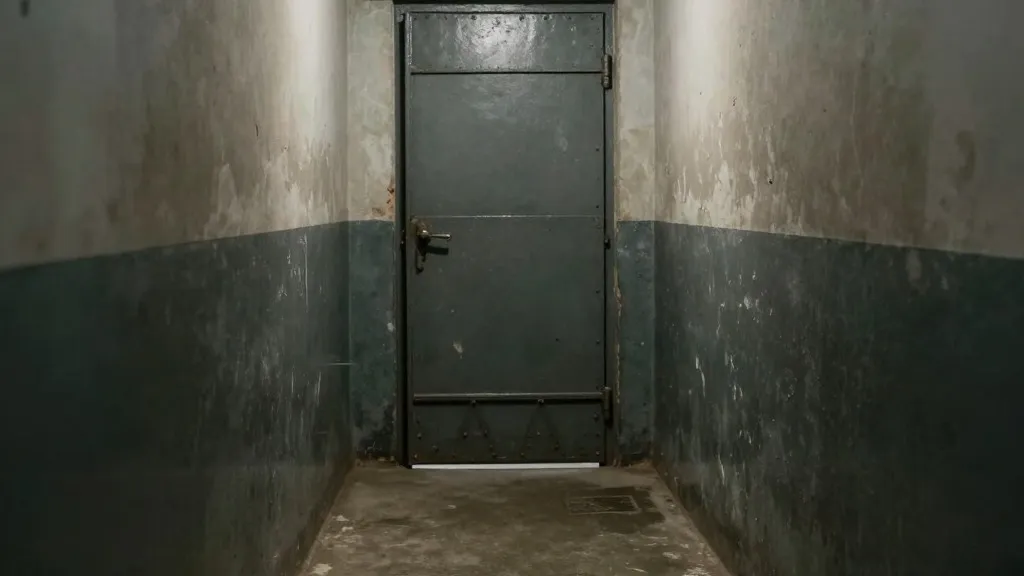
As time passed, Khyliuk observed a steady decline in Hubbard's health. They were held in adjacent cells, allowing Khyliuk to hear the American's complaints. Guards increasingly summoned Hubbard to see the prison doctor. Khyliuk described the facility as having broken windows and severe cold, forcing detainees to huddle in bathrooms to find warmth. He characterized the conditions at Novozybkov as worse than those at the next prison in the chain.
The men were later transferred to the Pakino facility, where Shyshko noted that Hubbard's condition had deteriorated significantly. He described severe rot on the retired teacher's knees and feet. Shyshko had to bandage Hubbard at the medical center because the doctor refused to do so. The inmate was described as weak and barely able to move. The daily routine at this location involved forced running, stress positions, and beatings, with a diet consisting mainly of porridge, bread, and potatoes. Shyshko also mentioned a handler who would set a dog on prisoners to bite them.
Khyliuk alleged that shortly after the transfer to Pakino, Hubbard was hidden from view. He believed this was done to conceal the inmate's poor condition from visiting staff from the International Red Cross. The Red Cross stated that it asks to see every individual wherever it is granted access and continues discussions with the parties involved in the conflict.
Hubbard disappeared from the prison records in 2024, leading Khyliuk to assume he had been released. Khyliuk himself was returned to Ukraine in August 2025 through a prisoner exchange. He compared the overall experience to the Stalin era and described Russian captivity as a torture machine.
The Kremlin officially released Hubbard on the same day that US special envoy Steve Witkoff met with Vladimir Putin in St Petersburg to discuss the ongoing war. Witkoff referred to the Russian president as a humanitarian. US President Donald Trump stated that he had asked Putin to free Hubbard during a phone call the previous week.
Despite his gratitude, Khyliuk called the timing of the release a form of shameful public relations for the US president, who is facing elections for Congress. Shyshko expressed hope that those responsible for the abuse will eventually face justice, stating that evil must be punished.
The release marks the end of a long and difficult period for Hubbard, while his two former cellmates continue to share their stories to bring attention to the conditions faced by others in similar situations. Their accounts add new layers of detail to the narrative of Hubbard's captivity and the broader context of prisoner exchanges in the conflict.
Source: BBC News