Bhutan raises 108 Buddhist stupas at site of planned mindfulness city
More than 40,000 volunteers helped build sacred monuments as Bhutan advances a city project intended to attract investment and keep young people in the country.
By Liam Kaminski ·
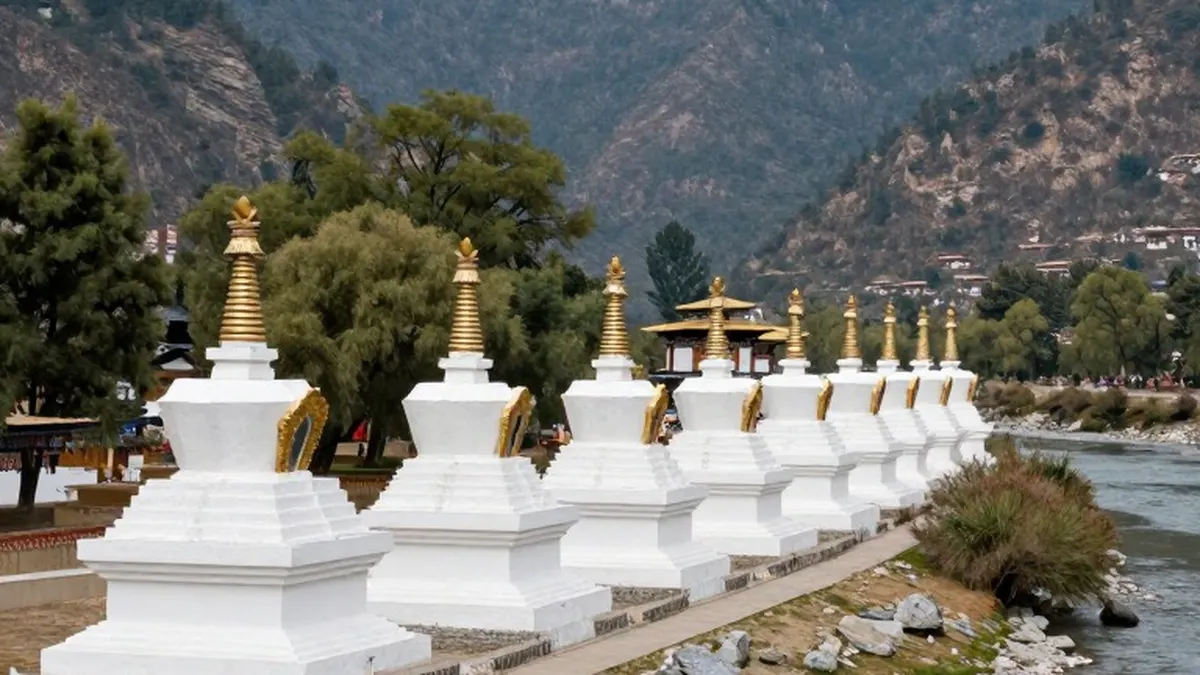
More than 40,000 volunteers helped construct 108 Buddhist stupas at the site of Bhutan’s planned Gelephu Mindfulness City, linking a major religious gathering with the kingdom’s ambitions for economic development. The monuments were installed on Sunday along a riverbank near the Indian border, where the new city is intended to take shape.
Standing 15 metres, or 50 feet, high, the stupas extend across 12 kilometres, or 7.5 miles, of riverbank. Officials said volunteers began work after midnight. Stupas are sacred Buddhist monuments seen throughout the Himalayas, and 108 holds religious significance in Buddhism, which is widely practised in Bhutan. Officials told AFP that about 200,000 people attended the ceremony, nearly a quarter of the country’s population.
King Jigme Khesar Namgyel Wangchuck told those gathered that he had been concerned about whether all 108 structures could be raised within a single day. He expressed gratitude that the effort had succeeded. Nima Gyeltshen, 65, who heads the Organisation for Youth Empowerment, which helps young Bhutanese find jobs, said the occasion would remain part of the country’s history for generations.
The king conceived Gelephu Mindfulness City, which was designed by Danish architects, as Bhutan confronts rising unemployment, declining birth rates and large numbers of skilled workers moving abroad. Leaders hope investment in sustainable businesses, green technology, education, tourism and financial services will strengthen the economy and encourage young people to remain.
Gelephu is currently a small town of about 10,000 residents in southern Bhutan, roughly 240 kilometres, or 150 miles, south of the capital, Thimphu. The king created the special zone through a royal charter in 2024. Bhutan, a landlocked nation between India and China with just under 800,000 people, is known for placing Gross National Happiness alongside economic growth among its priorities.
Questions remain over the project’s ability to secure enough investment, according to analysts. Indian billionaire Gautam Adani, who leads a conglomerate spanning ports and power, became a founding member of the project in January. Plans include a connection to India’s railway network in neighbouring Assam and an international airport scheduled to open in 2029.
Digital assets also feature in the development plans. Bhutan mines Bitcoin with surplus hydropower and has pledged to use digital assets to help support the city’s construction.
Among those attending Sunday’s ceremony was Bishnu Maya Moktang, 56, who told AFP she was excited about the planned city. “I hope to live long enough to see it,” she said, reflecting that her parents had died young and would never have the opportunity.
Source: Al Jazeera