Displaced Sudanese struggle to find food as aid cuts deepen hunger crisis
Families uprooted by Sudan’s war are struggling to afford meals as humanitarian funding shortages reduce assistance and warnings of famine intensify.
By Arjun Wojcik ·
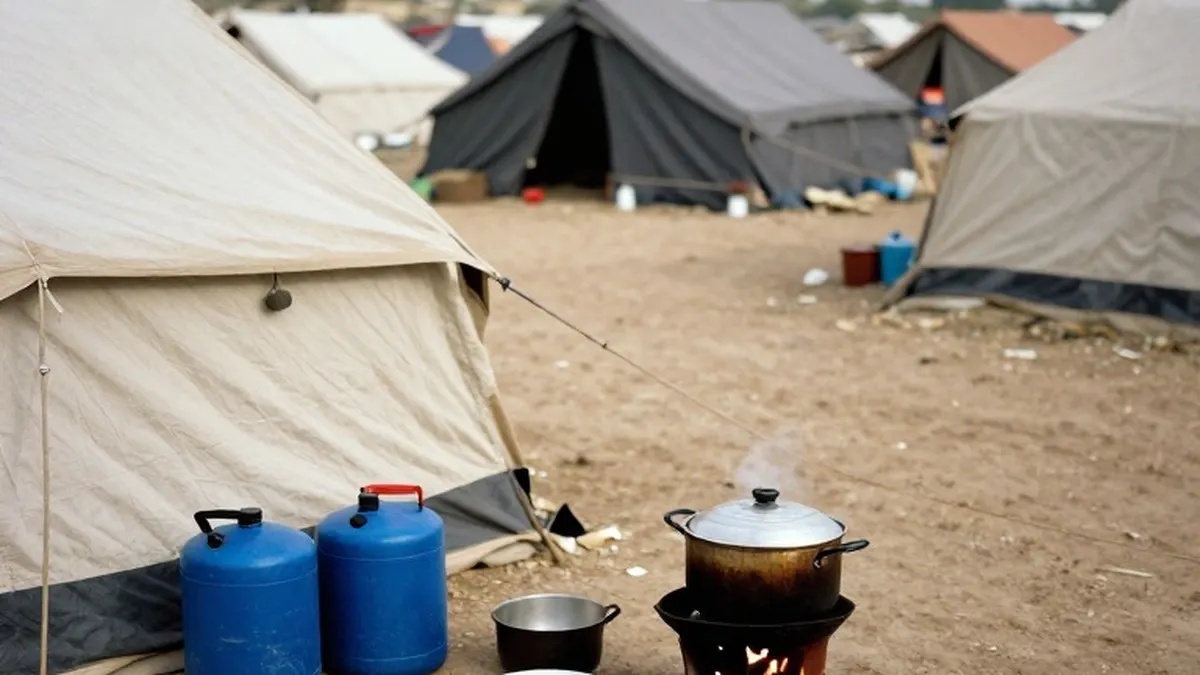
Displaced families in Sudan are facing worsening food shortages as aid deliveries shrink and earnings from casual work fail to cover basic needs. The World Food Programme said on October 22 that funding shortfalls had forced reductions in monthly food assistance affecting about 900,000 displaced people. Across the country, about 19.5 million people face acute hunger, including five million experiencing emergency levels of food shortages.
The agency says famine remains a risk in several hunger hotspots, particularly Greater Darfur and Greater Kordofan. A joint statement released by the United States Department of State on October 27 also called for urgent action over deteriorating food security and warnings from the Integrated Food Security Phase Classification about the possibility of famine in the coming months.
For Aisha Adam, 50, the crisis has meant trying to support two children through a small food business in Port Sudan. She fled Khartoum’s al-Kalakla neighbourhood shortly after fighting began between the Sudanese Armed Forces and the paramilitary Rapid Support Forces on April 15, 2023. She first sought safety in nearby Omdurman, but further clashes forced her to leave again in May 2023.
Adam had intended to travel to Wad Madani in Gezira state, but instead boarded a bus to Port Sudan, knowing only that the coastal city was safe. She now lives with her orphaned grandson and nephew. After initially staying at a shelter in the city centre, she and other displaced residents were moved in June to a centre on the outskirts, where she received a tent for her household.
Assistance has fallen substantially since the relocation, Adam told Al Jazeera. She leaves early for a nearby market to sell zalabia, a Sudanese fried pastry, along with tea and coffee. Her earnings fluctuate, and replacing flour, cooking oil and charcoal often leaves too little money for a meal. Lentils cost 16,000 Sudanese pounds ($1.72) a kilogramme. She can no longer afford meat and mainly eats lentils and rice.
The business also helps Adam cope with uncertainty over the fate of her two missing sons. Keeping herself and the children fed remains her immediate priority, but illness is another concern. “My greatest fear is that we will fall ill, because we have no money for treatment,” she told Al Jazeera.
In al-Obeid, Esraa Mohammed, supervisor of the al-Suraiha 8 displacement camp, described shortages of food, clothing and other essentials. The camp has 450 registered displaced residents and another 40 recent arrivals awaiting registration, she said. Among its 100 children, 30 have severe acute malnutrition. Organisations distribute foods including peas, lentils, flour and oil, but Mohammed said supplies do not last her family a month. Residents seek casual work and sometimes go without food.
Mohammed also said people arriving from South Kordofan had described eating leaves during their escape. They told her they fled because they feared being killed by the RSF, following reports of civilians being murdered, detained or raped by its fighters. Aid workers estimate that Sudan’s war has killed as many as 200,000 people. It has displaced 13 million and brought famine to parts of the country.
Ahmed Ismail, an expert on the United Nations and NGOs, told Al Jazeera that humanitarian support falls far short of people’s needs amid displacement, destroyed livelihoods and collapsing health services. He warned that further aid reductions, escalating violations and restrictions on humanitarian access could deepen the catastrophe, increasing the danger facing children, women and older people.
Source: Al Jazeera